
Brooklyn’s older buildings carry decades of history in their brick, their stoops, and the pipes hidden behind their walls. Those aging pipes quietly shape the water you drink, and certified water testing laboratories Brooklyn can reveal exactly what those old lines add to your tap. This guide explains why older pipes matter so much for water quality and how homeowners, property managers, and residents can protect the people who rely on that water every day.
Why Brooklyn’s Aging Pipes Deserve Attention
New York City delivers water treated to strict federal and state standards, drawn from the Catskill, Delaware, and Croton watersheds. That water reaches your block clean and safe. The pipes inside your building decide what happens next.
Brooklyn holds a vast stock of brownstones, prewar apartment buildings, and row houses, many built long before modern plumbing codes existed. The private plumbing inside these structures often dates back decades, and the city does not maintain it. Once water crosses into those older lines, age and corrosion can reshape its quality before it ever reaches your glass. This is why the pipes you cannot see matter as much as the supply you can trace.
How Older Pipes Change Your Water
Aging plumbing affects water in several distinct ways, and each one carries its own consequences.
Corrosion From the Inside Out
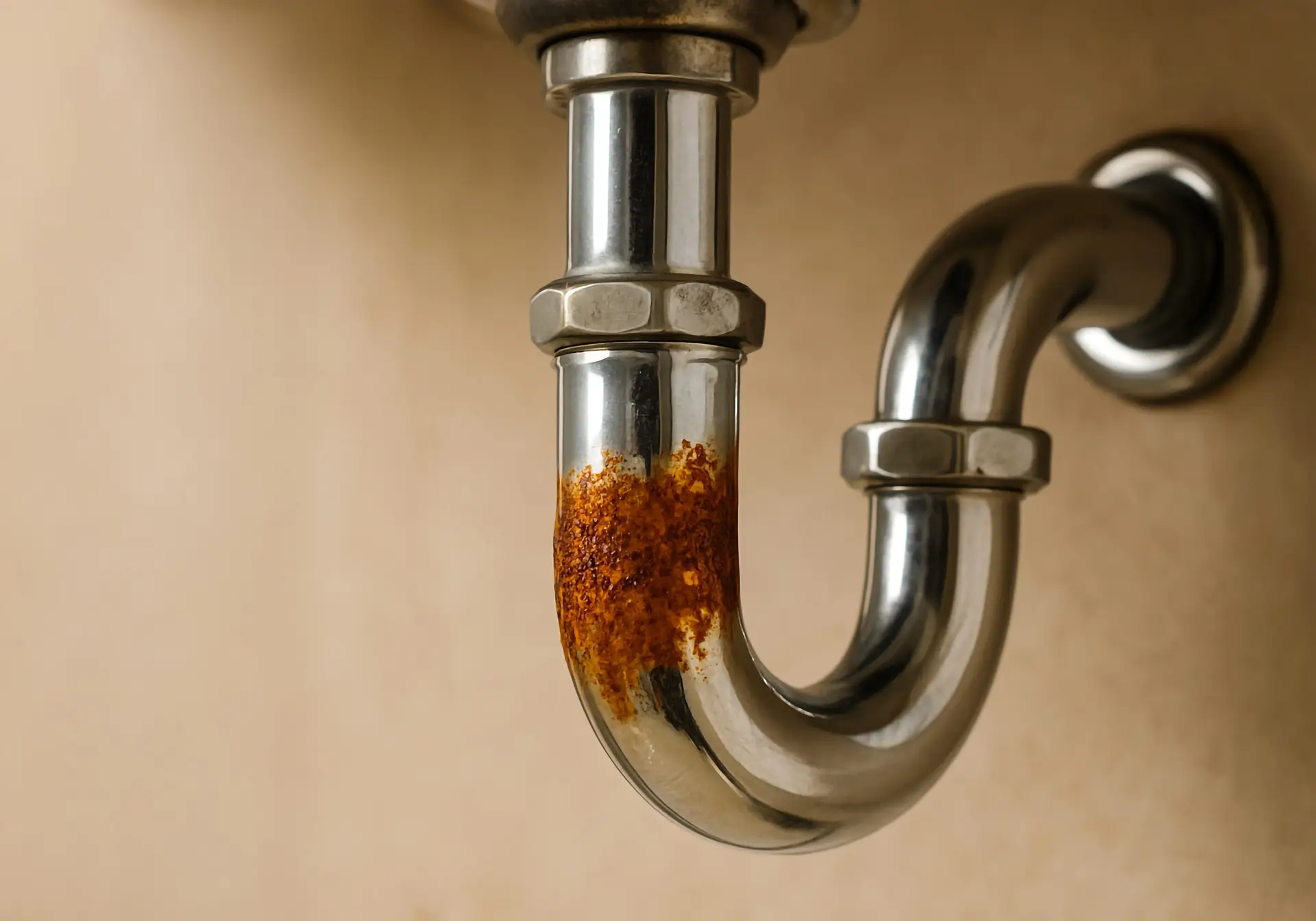
Old metal pipes corrode over time. That corrosion sheds rust, particles, and metals into the water, creating metallic tastes, discoloration, and visible sediment. Corroded interiors also grow rough, giving buildup and bacteria more places to collect.
Lead Pipes, Solder, and Fixtures
Buildings constructed before modern codes may still contain lead service lines, lead solder, or brass fixtures that contain lead. Lead leaches into water that sits in the line and carries no taste, smell, or color. This invisibility makes lead one of the most serious risks in older Brooklyn plumbing, especially for children and pregnant residents.
Mineral and Scale Buildup
Years of water flow leave mineral deposits and scale along pipe walls. This buildup narrows the pipes, weakens water pressure, and can break loose into your water as particles or cloudiness.
Galvanized Steel Deterioration
Many older Brooklyn buildings used galvanized steel pipes that rust from within as their protective coating wears away. These pipes release iron and trap sediment, producing discolored water and a metallic taste that worsens as the plumbing ages.
Warning Signs Your Pipes Are Affecting Your Water
Older plumbing often signals trouble before a serious problem develops. Watch for these clues.
- Discolored or brownish water: This points to rust from corroded iron or galvanized pipes.
- Metallic taste: This suggests iron, copper, or lead entering the water from old lines or fixtures.
- Cloudy water or visible particles: This indicates sediment and scale breaking loose inside the plumbing.
- Reduced water pressure: This reflects mineral buildup or corrosion narrowing the pipes.
- Water that clears after running: This shows that standing water in old lines was the source of the problem.
These signs give you a starting point, but they cannot measure what is present. Lead leaves no trace your senses can detect, which is why testing matters most in older buildings.
Why the Age of Your Building Increases the Risk
The older a Brooklyn building, the more likely its plumbing predates the safeguards we rely on today. Federal restrictions on lead in plumbing arrived relatively recently in the long life of these historic structures, so many still contain materials no longer considered safe.
Water that sits in old pipes overnight has more time to absorb metals and lose its protective chlorine. That is why the first draw of the morning often carries the highest concentration of contaminants in an older building. The combination of aging materials and standing water makes the age of your plumbing a genuine health consideration, not a cosmetic one.
Why Property Managers Cannot Overlook Old Pipes
Property managers oversee water quality across entire buildings, and aging plumbing rarely affects just one unit. A single corroded riser or an old service line can compromise water in many apartments at once.
Documented water testing protects tenants, supports maintenance and replacement planning, and provides a clear record if concerns ever surface. For a manager responsible for an older Brooklyn property, understanding the condition of the pipes is both a safety duty and a matter of accountability. Testing turns an invisible risk into a documented fact that guides real decisions.
How a Water Testing Laboratory Reveals What Your Pipes Add
Your senses can flag an obvious problem, but only laboratory analysis measures it. A certified laboratory brings precision to questions that hide behind your walls.
Testing measures lead, bacteria, chlorine, chlorination byproducts, metals such as iron and copper, pH, hardness, and sediment. An experienced laboratory also reads the patterns. Lead found only in first-draw samples points to your fixtures and service line. Iron and discoloration point to corroding steel pipes. This diagnostic approach separates a pipe problem from a supply problem and directs you toward the right fix instead of a costly guess.
Steps to Protect Your Water in an Older Building
Once testing reveals what your pipes contribute, you can act with purpose. These measures address the most common issues in aging plumbing.
- Flush standing water: Run cold water for a short time before drinking, especially after taps sit unused overnight.
- Install a certified filter: Match the filter to the contaminants your test reveals, such as a lead-certified filter when lead appears.
- Replace lead-bearing fixtures: Swap out old brass fixtures and lead solder that testing identifies as sources.
- Plan for pipe replacement: Use testing results to prioritize replacing the most problematic lines over time.
- Use cold water for cooking and drinking: Hot water pulls more metals from old pipes, so draw from the cold tap for consumption.
Frequently Asked Questions
Can old pipes lower my water quality even when the city water is safe?
Yes. The city treats water to strict standards before it reaches your block, but once it enters your building, it passes through private pipes the city does not maintain. Corrosion, lead, scale, and rust from aging plumbing can all reduce quality after the water leaves the main line.
How do I know if my Brooklyn building has lead pipes?
Lead carries no taste, smell, or color, so you cannot detect it on your own. Buildings constructed before modern plumbing codes are the most likely to contain lead service lines, solder, or brass fixtures. Laboratory testing, especially of first-draw water, is the only reliable way to confirm whether lead is present.
Why is my water discolored in the morning but clear later?
Water that sits in old pipes overnight absorbs more rust and metals and loses its protective chlorine. The first draw of the day often carries the highest concentration of these contaminants. Running the cold tap briefly flushes the standing water and usually clears the discoloration.
Does using hot water from old pipes make the problem worse?
It can. Hot water pulls more metals, including lead, from aging pipes and fixtures than cold water does. For drinking and cooking, always draw from the cold tap and heat the water separately. This simple habit reduces your exposure to metals from old plumbing.
Should I replace all my old pipes at once?
Not necessarily. Full replacement is ideal but costly, so testing helps you prioritize. Laboratory results identify which lines pose the greatest risk, allowing you to replace the most problematic pipes first while using filters and flushing habits to manage the rest.
Understand What Your Old Pipes Really Deliver
Brooklyn’s older pipes carry history, but they can also carry rust, metals, and invisible lead into the water you drink every day. You deserve facts about what those aging lines add rather than assumptions based on how the water looks. A certified water test identifies hidden risks, explains the results in plain language, and guides you toward the right solution. Whether you own a brownstone, rent an apartment, or manage a building full of tenants, professional analysis protects the people who depend on that water every day. Schedule a test, review the findings, and take control of your water quality with confidence.